A well-maintained hedge is one of the best assets a Waikato property can have - creating instant privacy from the road, blocking out the wind, and acting as a beautiful, living green wall around your section.
But hedges are also a bit of a commitment. Left to their own devices, a tight, tidy boundary line can soon transform into a shaggy, overgrown mess that takes over your driveway and blocks out your afternoon sun.
So, how often is it that you should trim your hedges?
The short answer is that there’s no single rule for every property. It all comes down to the plant species you have, how fast it grows, and how sharp you want it to look. Here is a practical look at how to get the timing right for your yard.
The Growth Trap: Why Regular Trimming Matters
It’s tempting to leave a hedge alone until it looks completely wild, thinking you’ll save time and money by just doing one massive cut a year. But this is actually a trap that can ruin the long-term health of the hedge.
Most common hedge plants only produce lush green leaves on the outer layer where the sunlight hits. The inside of the hedge remains a structure of bare, woody branches. If you let a hedge grow two meters out of bounds and then chop it back hard, you'll expose that bare, woody interior. Instead of a thick green wall, you're left with an ugly, brown skeleton that can take years to recover.
As well as managing the height, regular trimming forces the plant to branch out and grow densely. The more frequently you trim the tips, the thicker and tighter the hedge becomes.
A Quick Guide by Species: How the Timing Changes
Different plants grow at completely different speeds. Here is how the schedule typically breaks down for the hedges we see most often across Hamilton and the wider region:
Fast Growers (Privet, Lonicera, Photinia / Red Robin)
The Schedule: 3 to 4 times a year.
Why: These species are fantastic if you want privacy quickly, but they don't know when to stop. Photinia, for example, puts on brilliant red new growth in spring that looks stunning but requires regular tipping to keep its shape and color. If you leave these for a full year, they will easily swallow up your garden paths.
Standard boundary hedges (Griselinia, Laurel, Camellia)
The Schedule: 1 to 2 times a year.
Why: Griselinia is easily the most popular choice for modern Waikato sections. It grows at a manageable pace and has beautiful, broad green leaves. A solid trim in late winter/early spring, followed by a light tidy-up at the end of summer, is usually all it takes to keep a Griselinia hedge looking immaculate year-round.
Slow and Steady (Conifers, Buxus / Box Hedges)
The Schedule: Once a year.
Why: Smaller formal box hedges or large, established conifer screens grow slowly and hold their shape for a long time. They generally only require one major structural cut a year to stay sharp.
Why Now Is the Perfect Time to Get Ahead
If you’re looking at your hedges right now and thinking they’re looking a bit shaggy, this is a great time to take action.
Right now, the plants are still largely dormant from the winter cold. Trimming them back in late winter allows you to reset the shape and height before the spring growth spurt hits in September and October. By clearing away the old growth now, the hedge will push all its new spring energy into a fresh, flush, perfectly even layer of green leaves.
It also means your boundary lines will look sharp and tidy right through the spring months, saving you from having to scramble for an emergency booking once the warmer weather arrives.
The DIY Reality Check
Keeping low shrubs and knee-high formal hedges tidy is a great way to spend a sunny Saturday morning with a pair of hand shears. But once a hedge grows above head height, it becomes a completely different type of job.
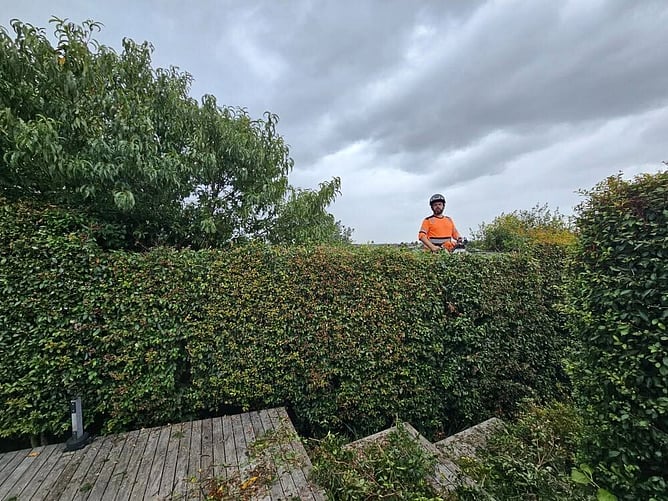
Trimming a tall hedge safely requires specialised platforms, long-reach commercial trimmers, and a lot of upper-body strength. Trying to balance on a rickety ladder on uneven lawn while swinging a petrol trimmer is incredibly dangerous. On top of the safety risk, there’s the sheer volume of green waste. A heavy hedge trim can easily produce a mountain of clippings that won't fit into a standard green bin.
Professional hedge trimming ensures laser-straight lines, flat tops, and healthy plants. Plus, a professional team can knock out in two hours what would take a homeowner an entire painful weekend - and they’ll take every single leaf of the mess away with them.
Get Your Property Set
Whether you have a low formal hedge that needs a precision tidy-up or a towering multi-meter shelterbelt on a lifestyle block that’s blocking your views, getting the timing right makes all the difference.
Our team at Triggers Trees has the professional gear, safety equipment, and experience to keep your hedges perfectly shaped, healthy, and under control.
Flick us a message today to book a 100% free, zero-obligation quote. We’ll take a look at your property, give you advice on the best schedule for your specific plants, and leave your section looking immaculate.