In many cases, trees can thrive for decades, with the right care and maintenance.
But not every tree can - or should - be saved.
Sometimes a tree becomes unsafe, outgrows its surroundings, or is damaged by disease, storms, or structural issues.
The challenge for many homeowners is knowing the difference between a tree that simply needs pruning and one that may need to come down altogether.
While every situation is unique, here are seven signs that a tree may need professional assessment and, in some cases, removal.
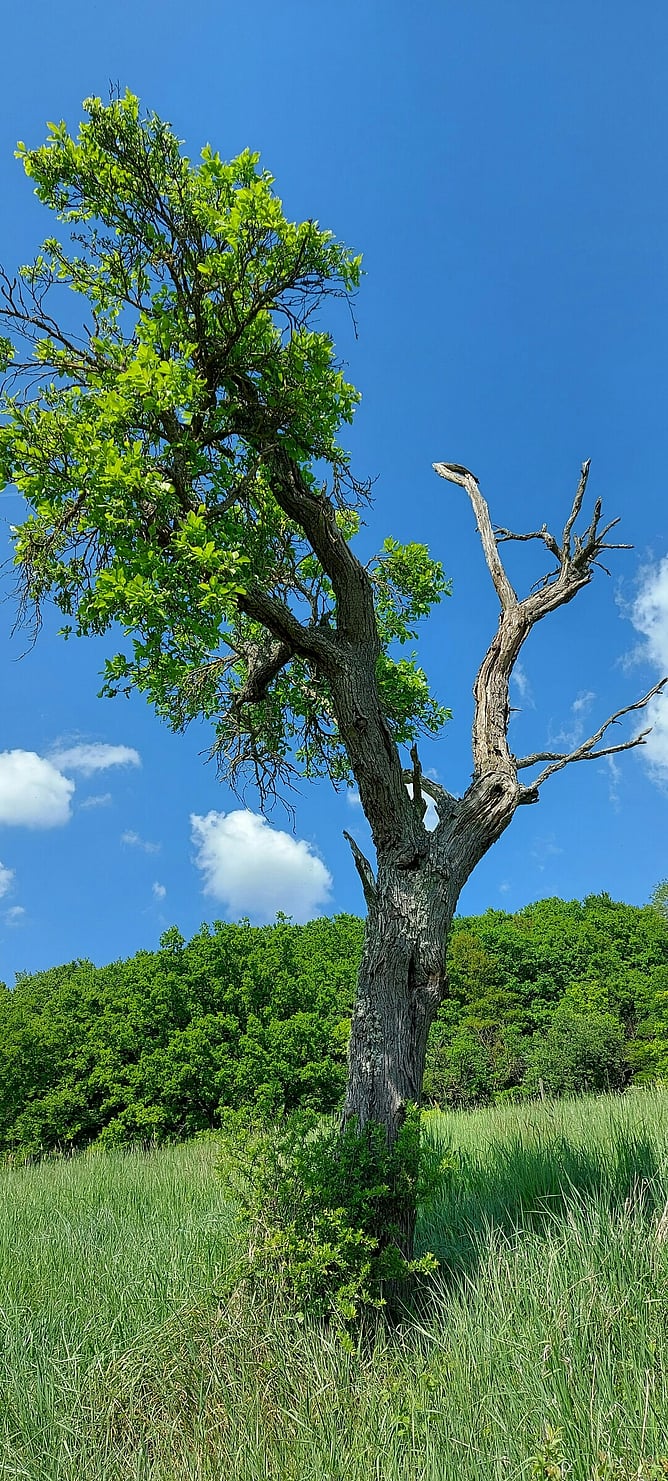
1. The Tree Is Dead or Dying
This may seem obvious, but it's not always easy to tell whether a tree is dead.
A tree that fails to produce leaves during the growing season, has extensive dead branches throughout the canopy, or shows significant bark loss may be in serious decline.
Dead trees become increasingly brittle over time. As the timber dries out, branches are more likely to fail without warning, particularly during periods of strong wind or heavy rain.
While some trees can recover from stress or temporary damage, a tree that is largely dead will often become a safety risk if left standing.
2. There Are Large Cracks or Splits in the Trunk
Trees are remarkably resilient, but major structural damage is a different story.
Deep cracks, splitting trunks, or large cavities can weaken a tree's ability to support its own weight. In some cases, these defects develop gradually over many years. In others, they appear after storms, high winds, or heavy branch failure.
Not every crack automatically means removal is required, but significant structural defects should never be ignored.
A professional assessment can determine whether the tree can be managed through pruning or whether removal is the safer option.
3. The Tree Is Leaning More Than It Used To
Many trees naturally grow at an angle, and a slight lean isn't necessarily a problem. What matters, however, is change.
If a tree has recently begun leaning, appears unstable, or the ground around its base is lifting or cracking, it could indicate root failure.
This is particularly important after periods of heavy rain, when saturated soil can reduce a tree's stability.
4. Significant Branches Are Regularly Falling
The occasional small twig dropping from a tree is perfectly normal. Large branches, however, are another matter.
Repeated branch failures can indicate poor tree health, structural weakness, disease, or internal decay. Even if the tree still appears healthy from the outside, there may be underlying issues affecting its stability.
If sizeable branches have fallen more than once, it's worth investigating why, rather than just cleaning up the debris each time.
5. The Roots Are Causing Major Problems
A tree's health depends on its roots, but roots can sometimes create problems of their own.
Lifting driveways, damaging retaining walls, interfering with foundations, breaking underground pipes, or creating trip hazards are all signs that a tree may have outgrown its location.
In some situations, root pruning or management may provide a solution. In others, removal becomes the most practical long-term option.
6. Disease or Decay Is Widespread
Trees can often tolerate a surprising amount of damage and still remain healthy.
However, extensive fungal growth, large hollow sections, visible decay, dieback throughout the canopy, or signs of advanced disease can compromise a tree's structural integrity.
One of the challenges with decay is that much of it can occur internally, where it's difficult to see from the ground.
A tree may appear relatively healthy while significant deterioration is occurring inside the trunk or major limbs.
If you notice mushrooms or fungal bodies growing around the base of a tree, it's worth having it professionally assessed.
7. The Tree Is No Longer Suitable for the Space
Sometimes a tree has simply become too large for its surroundings, perhaps because it’s blocking significant amounts of sunlight, overwhelming a small section, interfering with buildings, creating ongoing maintenance issues, or limiting future plans for the property.
While pruning can often help manage growth, there are situations where removal provides the best outcome for both the property and the surrounding landscape.
Removal Isn't Always the First Option
One of the biggest misconceptions about arborists is that we automatically recommend removing trees.
In reality, removal is usually considered after other options have been explored.
Many trees can be retained through selective pruning, canopy reduction, deadwood removal, cabling, or ongoing maintenance. The goal is always to find the safest and most appropriate solution for both the tree and the property.
That's why professional assessment matters.
A tree that looks concerning may be perfectly healthy, while a tree that appears fine from a distance could be hiding serious structural issues.
Not Sure Whether a Tree Needs to Be Removed?
If a tree on your property is showing any of these signs, it's worth seeking advice before a small issue becomes a larger one.
The earlier potential problems are identified, the more options are typically available - and the easier it is to plan the next steps with confidence.
At Triggers Trees, we help homeowners across the Waikato assess, maintain, and safely remove trees when required. Whether you're concerned about a storm-damaged tree, a leaning trunk, or simply want peace of mind, our team can provide honest advice and practical recommendations tailored to your property.